Every business from a small store in South Mumbai to a large company runs on numbers. But have you ever wondered how …
Think about the last time you asked someone for directions and ended up completely lost. It wasn’t because they didn’t know the city; it was because they assumed you knew what “just past the big tree” meant.
We are doing the exact same thing with artificial intelligence every single day.
We treat AI like a mind-reading genie. We type in vague, one-sentence requests and then get frustrated when the output feels generic, flat, or just plain wrong. But the truth is, the tool isn’t failing you. You just haven’t learned how to talk to it yet. This is where the world of prompt engineering comes into play, and it is quietly becoming one of the most valuable skills of our decade.
What Exactly is AI, Anyway?
Before we talk about mastering the conversation, let’s clear up what we are actually talking to. At its core, AI (artificial intelligence) is just software designed to mimic human intelligence. It processes massive amounts of data, spots patterns, and uses those patterns to solve problems, write text, or create art.
When you use Generative AI tools like ChatGPT for writing or Midjourney for creating images you are interacting with a system that has read millions of books, articles, and websites. It knows a lot, but it has no common sense. It doesn’t know who you are, what your boss wants, or what tone you prefer unless you explicitly tell it.
Enter Prompt Engineering: The Art of Directing the Machine
If artificial intelligence ai is the engine, a prompt is the steering wheel.
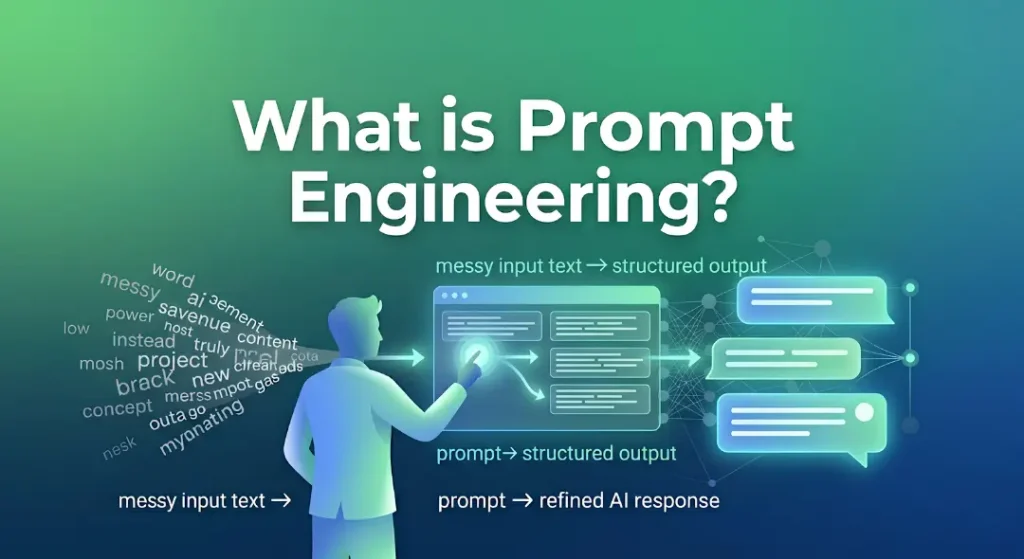
Prompt engineering is simply the practice of structuring, wordsmithing, and designing text inputs (prompts) to get the exact output you want from an AI model. Think of it like being a movie director. The AI is a brilliant actor who can play any role, but without your script, stage directions, and feedback, the performance is going to fall flat.
When you engineer a prompt, you aren’t just asking a question. You are providing context, setting constraints, defining the persona, and choosing the format. You are moving from a casual user to a power driver.
Why Prompt Engineering is Critical Right Now
A couple of years ago, simply knowing that AI tools existed was enough to give you an edge. Today, the novelty has worn off. Everyone knows how to type “write a marketing email” into a chatbot.
Because everyone has access to the same tools, the competitive advantage has shifted. The advantage no longer belongs to the person using the technology; it belongs to the person who knows how to get the highest-quality results out of it. Companies don’t just want people who use chatbots; they want people who can build automated workflows, generate hyper-specific code, and cut down project times by 70%.
How Prompt Engineering Works (Without the Geek Speak)
You don’t need a degree in computer science to understand this. AI models work on a concept called “probability.”
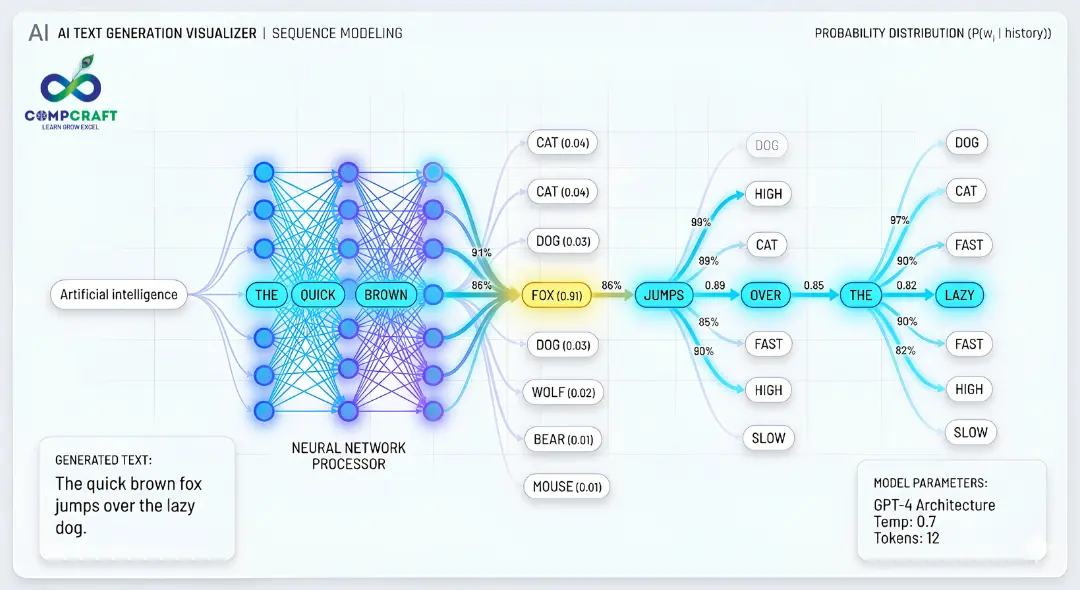
They don’t actually think the way humans do. Instead, they look at the words you typed and predict what words should logically come next based on their training.
If you give a vague prompt like “Write about dogs,” the AI looks at a massive, generic pool of probabilities. You’ll get a boring paragraph about how dogs are man’s best friend.
But if you write, “Act as a veterinarian. Write a compassionate 100-word email to a pet owner explaining why their senior dog needs a dental cleaning,” you radically narrow down the AI’s focus. You’ve locked it into a specific vocabulary, tone, and structure. The probabilities shift, and the output becomes incredibly precise and useful.
The Essential Types of Prompts You Need to Know
To get those precise results, you need to know the different ways to structure your inputs. Here are the core types that every beginner should practice:
1. Direct Instruction Prompts
This is the most straightforward style. You tell the machine exactly what to do, using clear command verbs.
Example: “Summarize this 10-page report into five bullet points focusing only on financial losses.”
2. Role Based (Persona) Prompts
This is one of the most powerful techniques. You tell the AI to adopt a specific identity, mindset, or professional background before answering.
Example: “Act as a cynical startup investor with 20 years of experience. Critique my business pitch deck idea and find the hidden flaws.”
3. Few Shot Prompts
AI learns incredibly well from examples. Instead of just explaining what you want, you show it a few completed versions first, then ask it to do the next one.
Example: Provide three examples of how your company writes product descriptions, then paste the raw details of a new product and say, “Now write a description for this item matching the style above.”
4. Constraint Based Prompts
Sometimes what you leave out is just as important as what you put in. Setting strict boundaries prevents the AI from rambling.
Example: “Explain how photosynthesis works for a 10 year old. Do not use sentences longer than 15 words, and do not use the word ‘chlorophyll’.”
Real Life Examples of Prompting in Action
Let’s look at how this plays out across different tasks. Notice the massive gap between a basic prompt and an engineered prompt:

For Daily Automation and Admin Tasks
Bad Prompt: “Help me organize my schedule.”
Better Prompt: “I have five meetings today (list times) and three hours of deep-focus work needed for a coding project. Create a time-blocked schedule for my 9-to-6 workday that includes a 45-minute lunch break and 10-minute breathers between meetings.”
For Digital Marketing Copy
Bad Prompt: “Write a caption for a sneaker ad.”
Better Prompt: “Write three variations of an Instagram caption for limited-edition waterproof sneakers targeting urban commuters aged 22–35. Use an energetic tone, include a clear call-to-action to click the link in bio, and use no more than two emojis per variation.”
The Big Benefits of Mastering This Skill
Learning how to communicate with ai intelligence isn’t just a cool party trick; it changes how you work, earn, and think.
Explosive Productivity
Tasks that used to take three hours like researching market trends, outlining presentations, or drafting contracts can be completed in fifteen minutes. You become a one-person army.
A Massive Career Edge
Companies are actively looking for professionals who can integrate these tools into their daily work. Whether you are an accountant, a graphic designer, or a software developer, adding prompt design to your resume makes you future-proof.
New Freelancing Streams
There is a booming gig market for people who can write high converting AI prompts, build custom chatbots for small businesses, or generate high-quality marketing assets using advanced tools.
Because the tech is moving so fast, structured learning is starting to pop up right in our neighborhoods. For instance, if you look into an AI tools training for beginners mumbai, you’ll find that it’s no longer just for seasoned tech workers. Everyday students, writers, and local business owners are picking up these skills to stay ahead of the curve.
Common Mistakes Beginners Make
When people start out, they usually fall into a few easy-to-fix traps:
- Being Too Polite: You don’t need to say “please” or “thank you” to a machine. It doesn’t hurt, but it wastes valuable space in your prompt. Be direct and concise.
- Giving Huge Walls of Text: If you dump a massive story into the chat box without clear formatting, the AI gets confused about what is background information and what is the actual task. Use spacing, line breaks, and bullet points to keep things organized.
- Trusting Every Fact: AI models are notorious for “hallucinating” which is just a fancy tech term for making things up with absolute confidence. Always double-check names, dates, and mathematical equations.
Practical Tips for Writing Flawless Prompts
If you want to start getting better results immediately, use this simple checklist every time you open a chatbot:
- Define the Role: Tell the machine who it is (e.g., “You are an expert copywriter”).
- Provide the Context: Explain the background situation and who the final audience is.
- Specify the Output: Tell it exactly what you want (a list, a table, an email, a code snippet).
- Set the Rules: Give it constraints on length, tone, and forbidden words.
Taking the Next Step in Your Career
The landscape is changing fast, and the absolute best way to learn is by rolling up your sleeves and getting your hands dirty with real tools. While playing around with online tutorials is a good start, there is immense value in structured, mentor led guidance to truly master advanced automation and workflows.
If you’re living or studying in the city and want to transition from a casual user to a certified expert, look for local learning hubs. Taking a structured chatgpt course in south mumbai can give you the hands-on project experience that standard online videos simply can’t replicate.
At CompCraft, we offer a comprehensive, beginner-friendly training curriculum designed to take you from basic questions to building advanced, industry-ready workflows. Learning to control AI is the closest thing to having a real world superpower and the best time to build that superpower is right now.
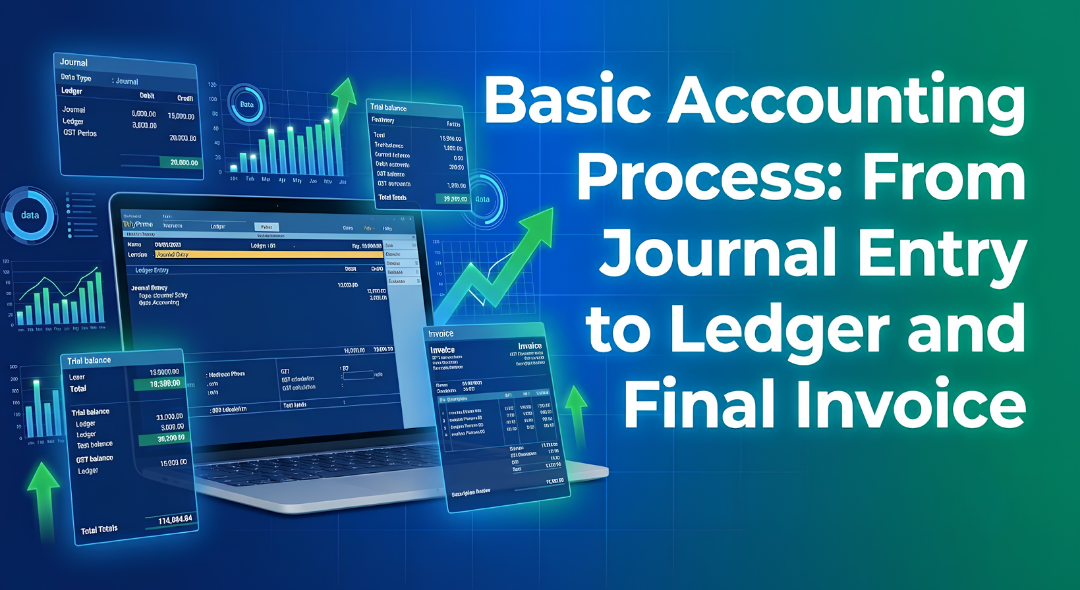
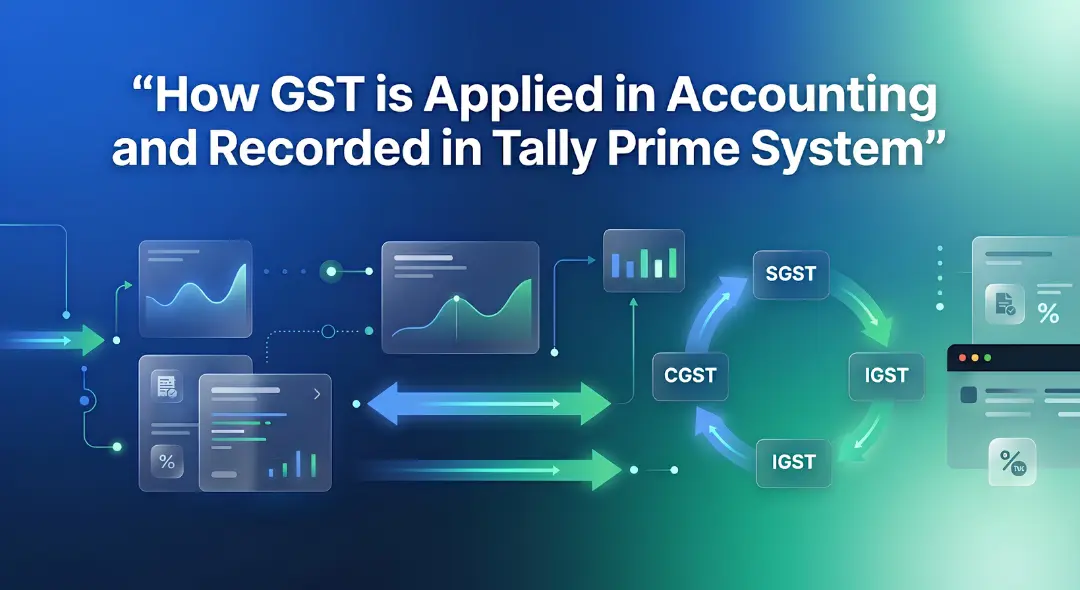
Hey everyone! If you have ever walked into a shop in Mumbai, bought a laptop, or even ordered food online, you have …
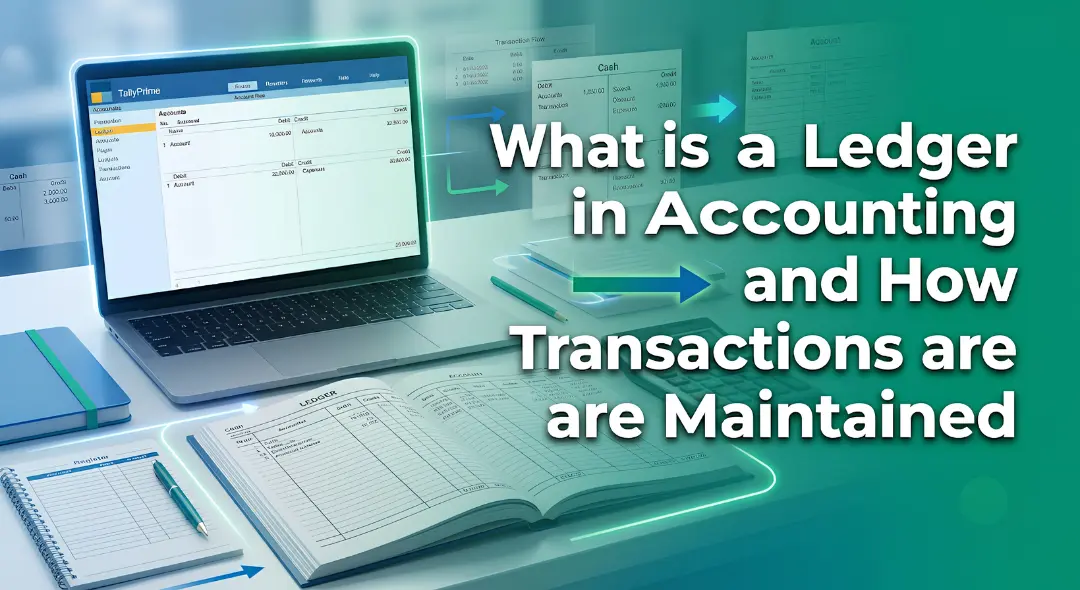
If you are new to business or managing accounts in Mumbai, you have probably heard the term ledger quite often. It sounds …
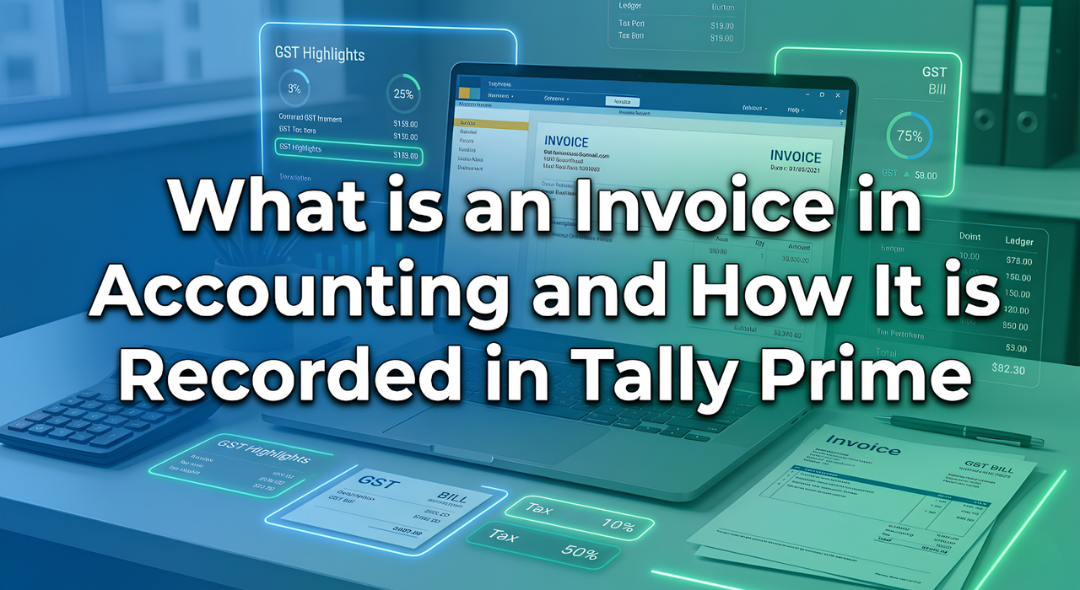
Introduction Have you ever bought a smartphone from an electronics shop and received a printed paper showing the amount you paid along …
Introduction: The Hidden World Behind Your Screen If you pick up your phone right now, what is the first app you will …
Every morning most of us in Mumbai wake up and instinctively reach for our phones. We check WhatsApp scroll through train updates …
Every week at our center I get the exact same question from students. They walk in look at the course list and …
Have you ever wondered what happens behind the scenes of your apps like Instagram, Spotify, or Netflix? Every time you scroll through …

If you want to get into the data analytics field or if you want to improve your skills you probably have a …

Imagine you are sitting in a boardroom or staring at a laptop screen looking at a spreadsheet with 10,000 rows of raw …
If you have spent any time on Instagram, LinkedIn or any other new platform that has come up, you have probably noticed …

Have you ever wondered why your phone can instantly unlock by looking at your face while a traditional computer program still struggles …

Imagine you want to hire a chef for your fancy restaurant.. Instead of hiring someone who already knows how to cook you …

The interview is going well until the hiring manager slides a laptop across the mahogany desk. “Here is a raw export of …

Have you ever spent three hours building a report only for it to completely break because you inserted a single new column?. …

A Pivot Table in Excel is a tool to analyze data. It is 5:30 PM on a Friday. Your manager comes to …
Imagine you have just opened a high-end boutique in the bustling lanes of South Mumbai. You have the inventory, and the decor …
Have you ever been sitting at a cafe near Marine Lines chatting with a friend about needing a new laptop only to …

Data is everywhere. Numbers and columns do not tell a story on their own. If you have ever tried to share a …