Every business from a small store in South Mumbai to a large company runs on numbers. But have you ever wondered how …
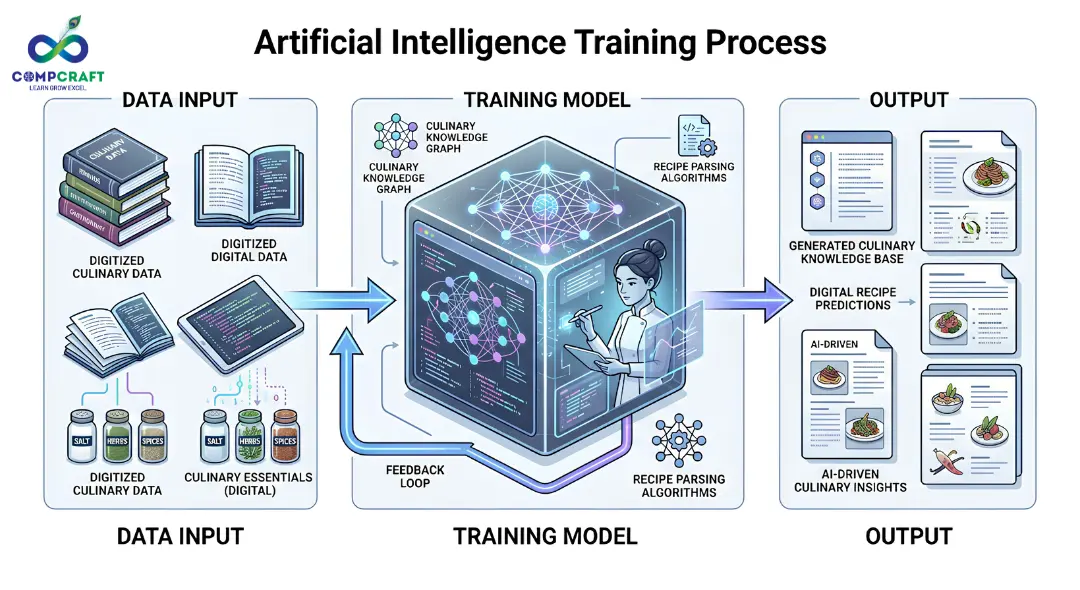
Imagine you want to hire a chef for your fancy restaurant.. Instead of hiring someone who already knows how to cook you have to raise them from birth.
The Blank Slate
The baby knows nothing at first. They don’t know what a stove is, what salt tastes like, or how to hold a knife. This is like an AI model. Just a lot of empty digital brain cells.

Phase 1: Pretraining
Reading Every Cookbook in the World
Before this kid ever steps into a kitchen, you lock them in a library for years. They read millions of cookbooks, food blogs, history books about farming, and chemical breakdowns of ingredients. They aren’t cooking meals yet; they are just learning how language works, what ingredients usually go together (like tomato and basil), and what “food” even means. By the end, they have a general understanding of the world of food. This is Pretraining.
Phase 2: Fine-Tuning
Cooking a Specific Menu
Now you finally bring them into your kitchen. You tell them, “Okay, you have a brain. Now I want you to specialize strictly in making Mumbai street food.” You give them recipes, taste their food, and correct them when they add too much spice. Because they already know what “cooking” is from their years of reading, they learn this job incredibly fast. This is Fine-Tuning.
If you skipped Phase 1 and immediately tried to teach them a vada pav recipe without them knowing what a potato or heat even was, it would take centuries to train them!
What is Model Pretraining in AI?
How Large AI Models Are Actually Built
Ever wondered how ChatGPT already knows so much the very second you type your first prompt? This directly connects to the skills explained in What is Prompt Engineering and Its Benefits.
How does it seamlessly transition from writing a poem about local trains to debugging a complex piece of Python code?
It feels like magic. Like, there is a tiny super-intelligent computer living inside your screen that has read every book on Earth.
The secret behind today’s technology isn’t that these systems are born smart. They go through an expensive and massive educational journey. At the heart of this journey lies a process called model pretraining.
Let’s Break It Down
First Things First: What is AI?
Before we look at how these systems are built lets clear up the buzzwords.
When we talk about intelligence or AI we aren’t talking about robots that can think and take over the world.
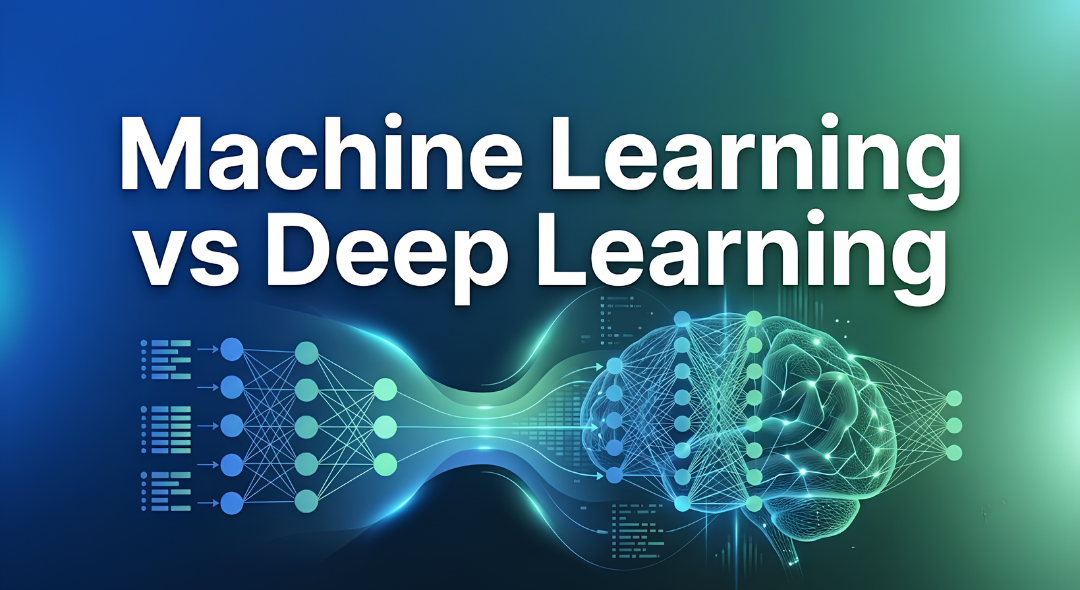
At its core, modern AI is advanced software that recognizes patterns, which is explained in more depth in The Difference between Machine and Deep Learning.
Think of it like a brain. If you show this brain a thousand pictures of cats, it starts to notice a pattern: two ears, whiskers, and a tail. Eventually, the software becomes so good at recognizing these patterns that it can spot a cat in a photo it has never seen before.
Today, AI systems have evolved from recognizing cats to generating human like text, creating artwork, and predicting the weather. To get to that level, they have to go to school.
The Big Confusion: Training vs. Pretraining
If you are looking into AI training programs, you will likely hear the words “training” and “pretraining” thrown around a lot. They sound identical. They represent completely different stages of an AI’s life.
Here is the easiest way to understand the difference:
- Training is the process of teaching a model.
- Pretraining is the phase of education. It’s the schooling where the model learns general knowledge, grammar, facts about the world, and reasoning skills.
Think of pretraining as going to school from kindergarten all the way through a college degree. You learn math, history and language. You aren’t a lawyer or a doctor yet. You have the foundational intelligence needed to become one if you study a bit more.
What is Model Pretraining in AI?
So, what is the definition of model pretraining?
Pretraining is the phase where an AI model is fed an amount of raw data. Like billions of pages of internet text, books, articles, and code. During this stage, the model’s only job is to play a game of “fill in the blank.”
Imagine reading the sentence: “The sun rises in the…”
Your brain automatically fills in the word “east.” Why? Because you’ve seen that pattern thousands of times in your life.
During pretraining, a generative AI model does this trillions of times. It looks at a sentence, guesses the word, checks if it was right, and adjusts its internal settings based on the result. It repeats this until it perfectly understands how words, facts, and ideas connect to one another.
The Three Pillars: How Large AI Models Are Built
Building a model from scratch requires three fundamental ingredients. If you miss one, the system falls apart.
1. The Fuel: Data
Data is what feeds the AI. For models, developers collect petabytes of data from the internet. This includes Wikipedia articles, scientific journals, public forums, and digital libraries. The quality and diversity of this data determine how smart the final model will be.
2. The Engine: Algorithms
An algorithm is a set of instructions, often implemented using programming languages like those explained in What is Python Programming and How It Works in Software Development.
For AI, the Transformer algorithm is used. It allows the AI to understand the context of words.
For example, in the sentence “I went to the river bank after leaving the money bank,” the Transformer helps the AI realize that the first “bank” relates to water while the second relates to finance.
3. The Muscle: Compute Power
You cannot train an AI on a standard laptop. It requires supercomputers packed with thousands of high-end Graphics Processing Units (GPUs).
This computing power performs the trillions of calculations per second required to process the data.
A Step by Step Look at the Building Process
Step 1: Data Gathering and Cleaning
Engineers scrape massive amounts of text from the internet. However, the internet is full of spam, duplicates, and toxic content. Teams spend months cleaning this data.
Step 2: The Pretraining Marathon
The cleaned data is fed into the supercomputers. This phase can take months. Cost millions of dollars. The model emerges with a general understanding of human language and world facts.
Step 3: Fine Tuning
An AI fresh out of pretraining is smart but unpredictable. Human trainers step in, ask the AI questions, and grade its answers.
They teach it to behave like an assistant, similar to how structured data insights are presented in Data Visualization Techniques: How to Turn Complex Data into Simple Insights.
Step 4: Safety Guardrails
Finally, safety filters are put in place to ensure the model doesn’t leak information or generate hate speech. Once passed, the model is packed into an app or website for use.
Real-World Examples
Pretraining isn’t just used for chatbots. It runs the digital world.
- ChatGPT & Claude: These tools are pretrained on text data to answer questions and write essays.
- Streaming Recommendation Systems: Netflix and Spotify use models pretrained on user histories to understand patterns and serve recommendations.
- Search Engines: Google uses pretrained language models to understand the intent behind search queries.
Why Pretraining’s a Game Changer
In the past, if you wanted an AI that could translate English to Spanish, you had to build a specific model just for Spanish translation. Pretraining changed everything because of Transfer Learning.
Because a pretrained model already possesses a foundation of general knowledge, developers can take that exact same model and tweak it for hundreds of different jobs with minimal effort. It democratizes technology, allowing smaller companies to build tools.
For people living near city areas, finding a good AI course in Marine Drive or an AI course in Charni Road can help you meet industry experts who know the local job market.
Join the AI Revolution with CompCraft
If you want to truly understand how AI models are built and applied in real-world scenarios, structured learning can make a huge difference. Explore programs like this AI Course to build practical, job-ready skills.
We make complicated technology easy to understand.
We do not just teach you how to use AI tools. We teach you how they work, how they are made, and how to use them to secure your career.
Want to gain skills?
Get in touch with our mentors at CompCraft now. Start your journey into the future.


Hey everyone! If you have ever walked into a shop in Mumbai, bought a laptop, or even ordered food online, you have …

If you are new to business or managing accounts in Mumbai, you have probably heard the term ledger quite often. It sounds …

Introduction Have you ever bought a smartphone from an electronics shop and received a printed paper showing the amount you paid along …

Introduction: The Hidden World Behind Your Screen If you pick up your phone right now, what is the first app you will …
Every morning most of us in Mumbai wake up and instinctively reach for our phones. We check WhatsApp scroll through train updates …
Every week at our center I get the exact same question from students. They walk in look at the course list and …
Have you ever wondered what happens behind the scenes of your apps like Instagram, Spotify, or Netflix? Every time you scroll through …

If you want to get into the data analytics field or if you want to improve your skills you probably have a …

Imagine you are sitting in a boardroom or staring at a laptop screen looking at a spreadsheet with 10,000 rows of raw …

If you have spent any time on Instagram, LinkedIn or any other new platform that has come up, you have probably noticed …
Think about the last time you asked someone for directions and ended up completely lost. It wasn’t because they didn’t know the …
Have you ever wondered why your phone can instantly unlock by looking at your face while a traditional computer program still struggles …

The interview is going well until the hiring manager slides a laptop across the mahogany desk. “Here is a raw export of …

Have you ever spent three hours building a report only for it to completely break because you inserted a single new column?. …

A Pivot Table in Excel is a tool to analyze data. It is 5:30 PM on a Friday. Your manager comes to …
Imagine you have just opened a high-end boutique in the bustling lanes of South Mumbai. You have the inventory, and the decor …

Have you ever been sitting at a cafe near Marine Lines chatting with a friend about needing a new laptop only to …

Data is everywhere. Numbers and columns do not tell a story on their own. If you have ever tried to share a …