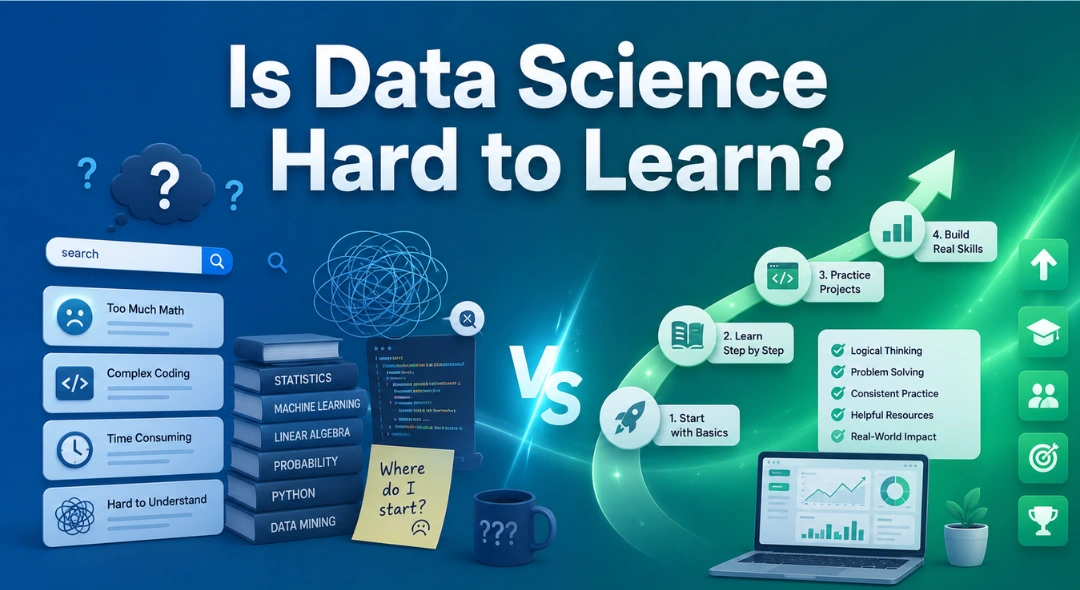
Is Data Science Hard to Learn? If you’ve ever searched “is data science hard,” you already know the internet isn’t much help. …

Have you ever wondered why your phone can instantly unlock by looking at your face while a traditional computer program still struggles if you type a single password character incorrectly? It feels like the software is suddenly displaying like intuition. This shift is not a basic upgrade in regular software it represents the real-world application of Artificial Intelligence.
If you are trying to break into the tech space the terminology surrounding this shift can feel completely overwhelming. You read an article about Artificial Intelligence then someone drops the phrase Machine Learning. Right after another expert mentions Deep Learning. Are they competing technologies? Are they separate concepts? It is a common misconception that these terms are interchangeable but treating them as the exact same thing is like saying a single engine component is the same thing as the entire sports car. Let us demystify these concepts once and for all with clear language.
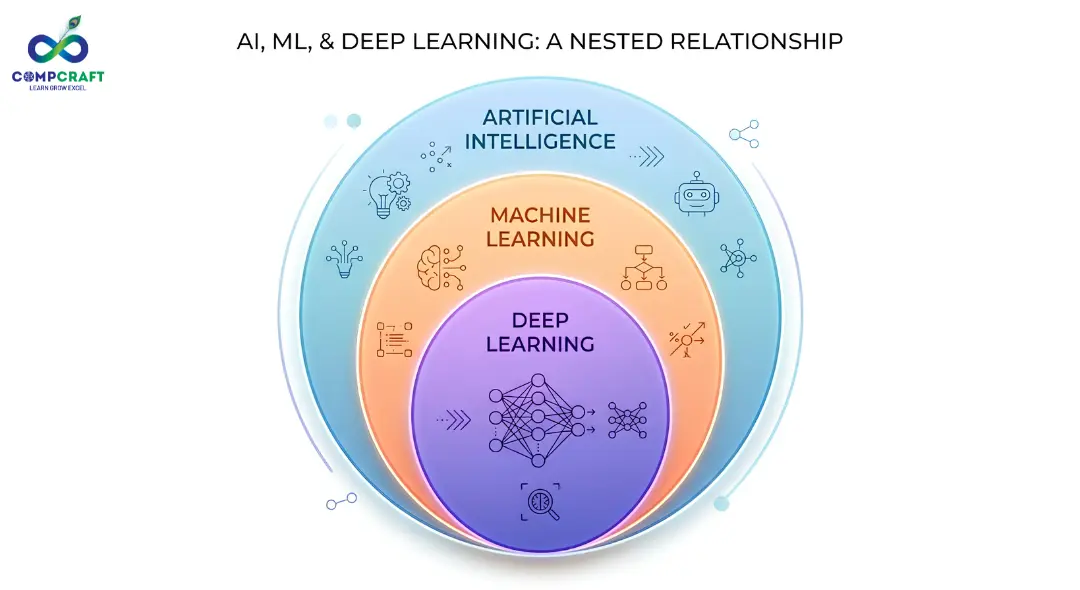
The Russian Nesting Doll Analogy
Before diving into definitions the easiest way to understand the architecture of Artificial Intelligence is to picture a classic set of Russian nesting dolls.
- The Largest Outer Doll: Artificial Intelligence. The vision of creating smart machines.
- The Middle Doll: Machine Learning. A method we use to achieve that intelligence by feeding data to computers.
- The Smallest Inner Doll: Deep Learning. A specialized hyper advanced subset of Machine Learning that mimics the human brain structure.
Decoding the Tiers: What is Artificial Intelligence, Machine Learning and Deep Learning?
To truly grasp the differences we need to inspect each doll starting from the outside and working our way into the core.
What is Artificial Intelligence?
At its level Artificial Intelligence is the science of making machines mimic human cognitive functions. When a machine can solve a problem spot a pattern understand spoken words or make an independent decision it is demonstrating intelligence.
Artificial Intelligence has been around for decades. It includes everything from old-school chess computers that follow hard coded rules written by human programmers to modern systems that write poetry. If a machine mimics behavior to achieve a goal it falls under the massive umbrella of Artificial Intelligence.
What is Machine Learning?
For a time the only way to make a computer do something was to write explicit line by line code. If Step A happens execute Step B.. Life is full of nuances and you cannot write a manual rule for every single scenario on earth. Machine Learning solved this bottleneck.
Of writing explicit instructions for a computer to solve a specific problem you feed the computer a massive dataset and let it figure out the patterns entirely on its own. You give it the inputs and the desired outputs and the Machine Learning algorithm builds its rules.
The Mango Analogy
Imagine teaching a child to recognize a mango. You do not give them a textbook listing a mangos mathematical curvature and hex code for its shade of yellow. Instead you show them ten mangoes. “This is a mango this is a mango this is also a mango.” Eventually the childs brain extracts the common features. The time they see a completely new mango they instantly recognize it. Machine Learning does that with data.
What is Deep Learning?
Deep Learning is an evolution of Machine Learning. While traditional Machine Learning is incredibly powerful it still requires an amount of human assistance to work properly. Humans have to step and tell the system what features to look for a process called “feature extraction.”
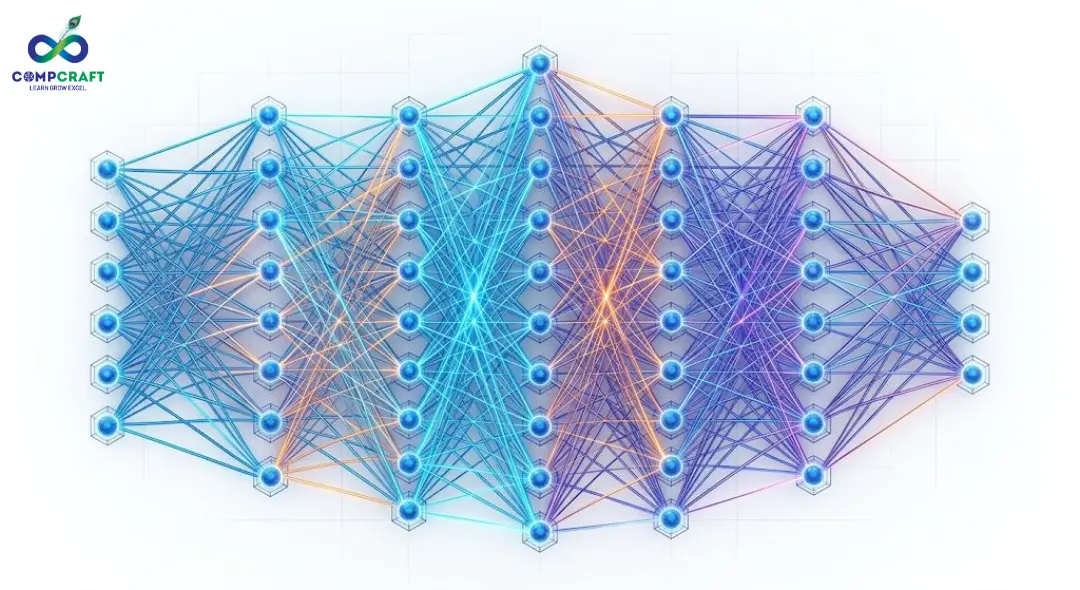
Deep Learning eliminates that step. It relies on a structure called Artificial Neural Networks, which are deeply inspired by the biological web of neurons in the human brain. These networks have layers upon layers of connections. Because of this layered architecture Deep Learning can take raw unorganized data like a massive video file or a raw block of text and figure out the features all by itself.
The Deep Mango Analogy
Let us apply our mango example here. In Machine Learning an engineer must manually tell the computer “Look at the circular shape look at the color spectrum and consider the weight.” In Deep Learning you simply dump 500,000 images of mangoes into the neural network. The first layer of nodes detects lines the second layer maps curves the third layer identifies textures and by the final layer the system has built a flawless independent concept of a mango without a human ever telling it what a “color” or “shape” is.
Machine Learning vs. Deep Learning: The Head to Head Comparison
To see how these two stack up practically let us look at their behaviors across different parameters.
1. Data Requirements
Machine Learning: Can deliver accurate results using small to medium datasets.
Deep Learning: It is incredibly data-hungry. If you give a neural network only a thousand data points its performance collapses. It needs millions of data points to truly shine.
2. Human Intervention
Machine Learning: Needs an expert programmer to clean the data structure it and point out what variables matter most.
Deep Learning: It figures out its variables. It requires less human guidance during the core feature-discovery phase but fixing errors inside the hidden layers can be exceptionally difficult.
3. Computational Power
Machine Learning: Can easily run on office laptops and basic computers.
Deep Learning: Requires heavy duty hardware infrastructure, GPUs to process thousands of matrix multiplications simultaneously.
Real Life Examples We Use Every Day
You are interacting with both of these systems throughout your day. Here is where they live in your digital routine:
- Netflix and YouTube Recommendations: When you open your streaming apps and see a list of curated videos, that is traditional Machine Learning. The algorithm studies your history notes your structured demographics, cross references it with millions of similar users and predicts your next click.
- Face ID and Siri: When your phone unlocks in the dark even if you are wearing a pair of sunglasses or growing a beard that is Deep Learning. A traditional Machine Learning algorithm would get confused by the changes. A deep neural network processes the facial pixels and recognizes the underlying bone structure.
- ChatGPT and GenAI: If you’ve ever experimented with Artificial Intelligence tools you’ve witnessed models. Tools like ChatGPT do not just follow text matching; they use deep transformer networks to understand the context, humor and emotional weight behind human language.

When to Use Which Strategy?
If you are starting a business or building a product you have to choose your tools based on your resources.
- Choose Machine Learning when: Your data is neatly organized in spreadsheets or SQL databases you have a budget you need results fast and you need to clearly explain why the algorithm made a specific decision.
- Choose Deep Learning when: You are dealing with data like raw audio live video feeds or massive text files you have access to extensive computing power and the problem is far too complex for a human to write down the defining characteristics.
Mapping Your Future in the Tech Industry
The professional landscape is pivoting rapidly around these technologies. Businesses across South Mumbai ranging from corporate financial firms near the stock exchange to creative agencies looking for a course are actively seeking individuals who know how to wield these tools. You do not necessarily have to be the genius who programs a network from scratch; knowing how to deploy these algorithms to solve real-world business problems makes you highly employable.
If you are looking to transition into this field do not try to master everything on day one. Start by learning how data is organized then explore Machine Learning algorithms and gradually move up to advanced neural networks.
For beginners looking for guidance trying to learn this entirely on your own through chaotic YouTube videos can lead to major frustration. If you are exploring a course in Charni Road it helps to find a mentor who can explain the day-to-day use of these systems. Finding a course that focuses on building actual portfolios can bridge the gap between abstract theory and a paying career.
At CompCraft
At CompCraft we specialize in stripping away the technical jargon. Our hands-on training programs are tailored to turn beginners into confident tech professionals giving you the real-world skills that Mumbai’s top employers are looking for right now.
The Era of Intelligent Innovation
The rapid expansion of Artificial Intelligence is not a tech bubble; it’s the new baseline for how software functions globally. Machine Learning gives us the ability to find patterns and predict outcomes while Deep Learning gives machines the capacity to perceive the world with human-like depth. Understanding the lines between these concepts changes how you look at the world. Of just consuming technology you begin to understand the mechanics under the hood and that curiosity is the first major step, toward building a future proof career. Keep exploring stay curious and embrace the data driven world ahead.
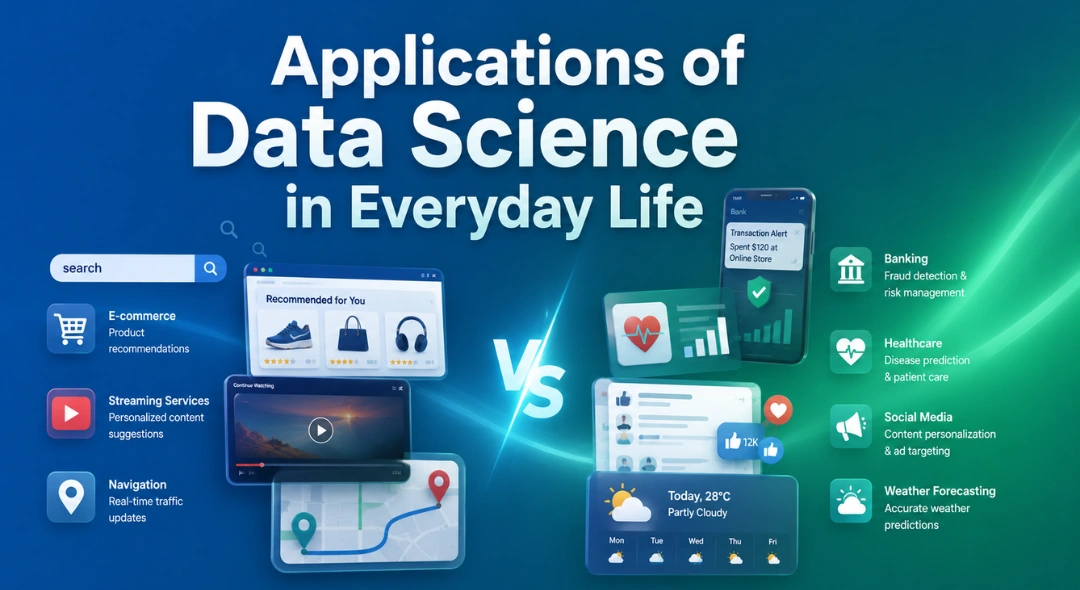
Applications of Data Science in Everyday Life Most people think data science is something that only happens inside huge tech companies or …
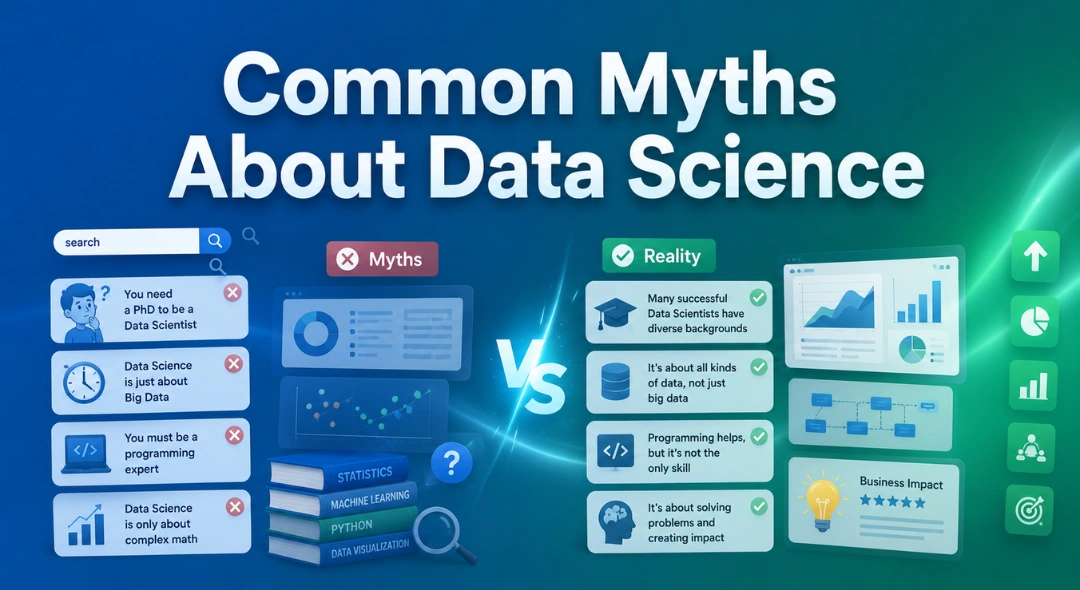
Common Myths About Data Science Data science has become one of those buzzwords that almost everyone has heard, but not everyone fully …
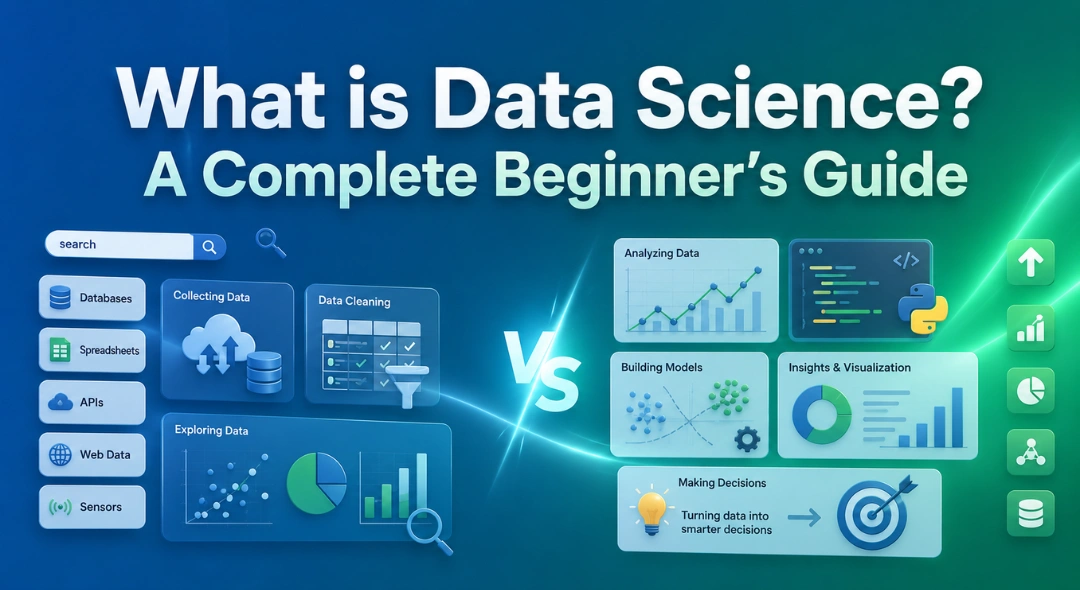
What is Data Science? A Complete Beginner’s Guide If you’ve spent any time online in the last few years, chances are you’ve …
Why Every Student Should Learn Computer Basics Walk into almost any classroom today, and you’ll spot laptops, tablets, or smartboards being used …
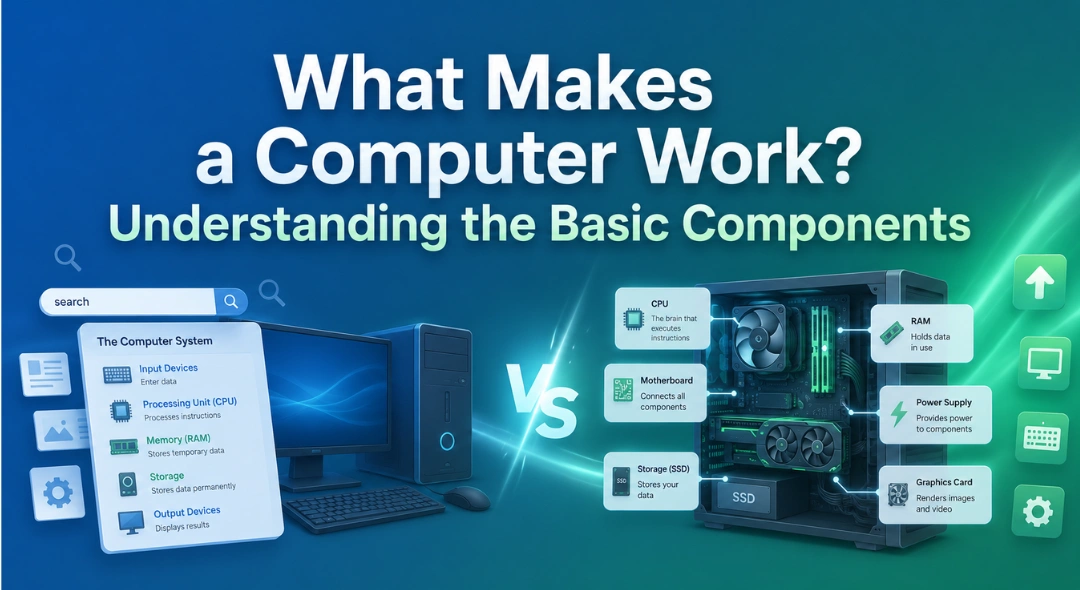
What Makes a Computer Work? Understanding the Basic Components Most of us use a computer every single day, typing emails, browsing the …
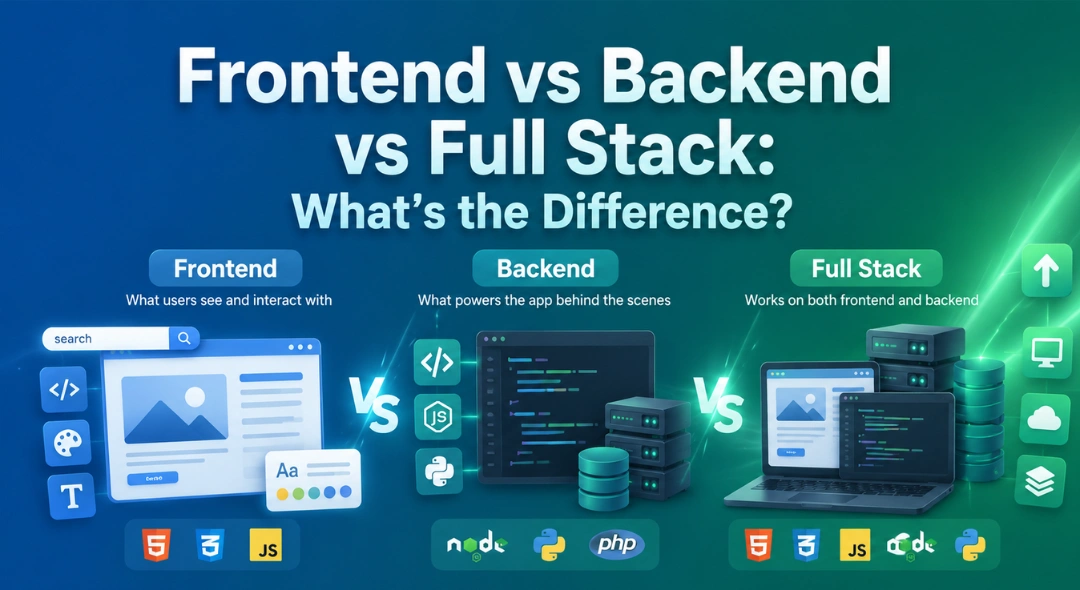
Frontend vs Backend vs Full Stack: What’s the Difference? If you’re exploring a career in software development, you’ve scrolled through job listings …
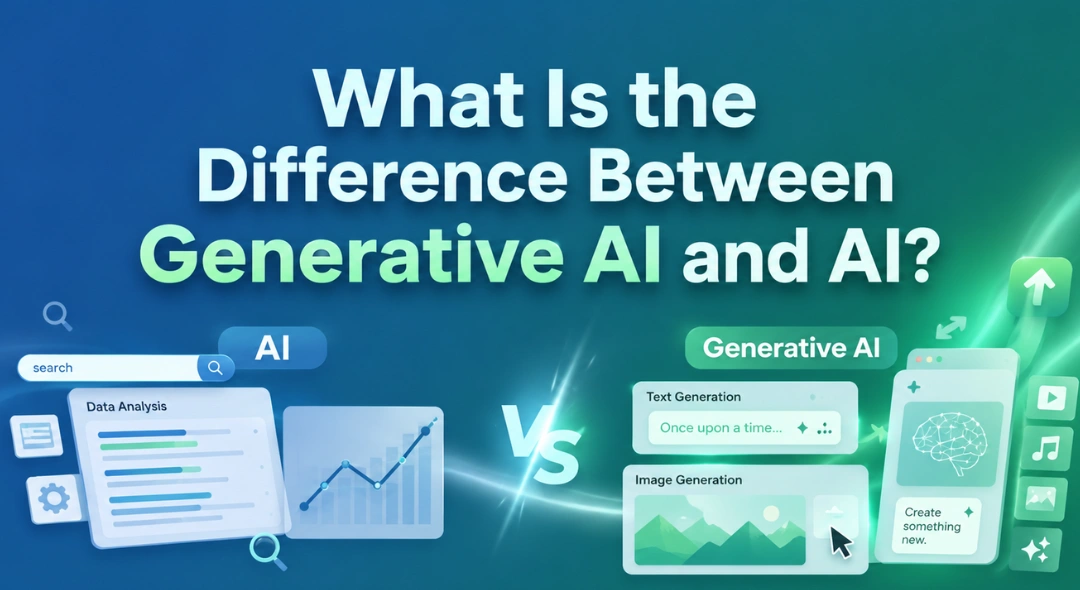
What Is the Difference Between Generative AI and AI? If you’ve spent any time online lately, you’ve probably noticed two terms being …

Every business from a small store in South Mumbai to a large company runs on numbers. But have you ever wondered how …

Hey everyone! If you have ever walked into a shop in Mumbai, bought a laptop, or even ordered food online, you have …

If you are new to business or managing accounts in Mumbai, you have probably heard the term ledger quite often. It sounds …

Introduction Have you ever bought a smartphone from an electronics shop and received a printed paper showing the amount you paid along …

Introduction: The Hidden World Behind Your Screen If you pick up your phone right now, what is the first app you will …

Every morning most of us in Mumbai wake up and instinctively reach for our phones. We check WhatsApp scroll through train updates …
Every week at our center I get the exact same question from students. They walk in look at the course list and …
Have you ever wondered what happens behind the scenes of your apps like Instagram, Spotify, or Netflix? Every time you scroll through …

If you want to get into the data analytics field or if you want to improve your skills you probably have a …
Imagine you are sitting in a boardroom or staring at a laptop screen looking at a spreadsheet with 10,000 rows of raw …
If you have spent any time on Instagram, LinkedIn or any other new platform that has come up, you have probably noticed …
Think about the last time you asked someone for directions and ended up completely lost. It wasn’t because they didn’t know the …